At a brief but powerful ceremony in Convention Hall, Gen. Thomas T. Handy, commander of the Fourth Army, personally presented the Gold Star button to Mrs. Roy A. Knight of Millsap while her husband looked on. The newspaper described them as “the modest parents of a large family,” standing quietly as the symbol of their son’s sacrifice was pinned in place. The event was not only for one family—it was a “token ceremony for all the next of kin in Texas who lost one of their immediate family during the war,” reflecting a statewide and nationwide effort to honor the fallen.
The emotion of the day was captured in the simple but powerful words spoken by Mr. Knight: “If we live not in vain—then they shall not have died in vain.” Mrs. Knight, speaking softly, added a broader sentiment, hoping that recognition would extend to “all those next of kin in Texas.” Even military leaders emphasized the meaning behind the moment, with General Handy reminding those present that honoring the fallen carried a responsibility: “It is up to you and me… to insure that we maintain peace, not only for this generation, but for all generations.”
The ceremony carried even deeper meaning because of the life it honored. Lt. Jack L. Knight, born in Garner, Texas, led troops of the 124th Cavalry in Burma during World War II. In one of the war’s fiercest engagements, he continued to lead his men even after being blinded by a grenade, pressing the attack until he was mortally wounded—actions that earned him the Medal of Honor. His courage in battle and the quiet strength of his parents at home became lasting symbols of Texas sacrifice, making May 30, 1948, a day not just of mourning, but of enduring legacy.
#TexasHistory #GoldStarFamilies #MedalOfHonor #WWIIHistory #LoneStarLegacy
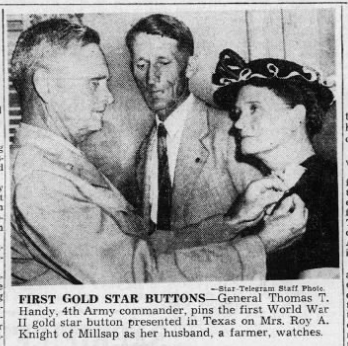 May 30, 1948 — In Mineral Wells, Texas, the parents of Medal of Honor recipient 1st Lt. Jack L. Knight received the first World War II Gold Star buttons presented in the state, marking a deeply emotional moment of remembrance.